📌 What Exactly Is Checkers Game?
Checkers — known as draughts in India, the United Kingdom, and many Commonwealth nations — is a two-player abstract strategy board game that has fascinated minds for over 5,000 years. At its core, checkers is played on an 8×8 squared board (the same board used for chess), with each player controlling 12 pieces that move diagonally. The primary objective? Capture all of your opponent's pieces or block them from making any legal move.
In India, the game has a special resonance. While Western checkers is the most common variant, India has its own traditional versions like Indian Draughts and regional adaptations that share the fundamental principles. The beauty of checkers lies in its elegant simplicity: easy to learn but surprisingly deep in strategy, making it accessible to children yet challenging for seasoned players.
If you have ever wondered about this timeless pastime, you are in the right place. This comprehensive guide covers absolutely everything — from the ancient origins to modern online play. Whether you are a complete beginner wanting to understand the checkers board, or an experienced player looking to sharpen your tactical arsenal, we have got you covered.
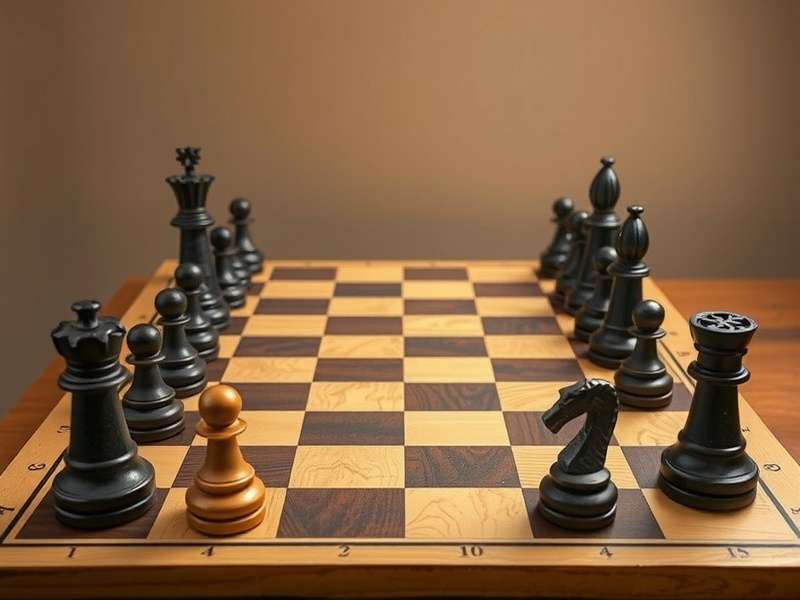
📜 The Rich History of Checkers: From Ancient Civilizations to Your Smartphone
Few games can claim a lineage as ancient and distinguished as checkers. Archaeological evidence suggests that similar board games were played in ancient Mesopotamia (circa 3000 BCE), where clay tablets depicted board setups remarkably similar to modern checkers. The ancient Egyptians played a game called Alquerque on a 5×5 board, which is considered a direct ancestor of checkers.
The first recognizable version of modern checkers emerged in 12th-century France, where players transformed the chessboard into a dedicated draughts board. The French game Le Jeu de Dames quickly spread across Europe, with each region adding its own rules and variations. By the 16th century, Spanish and Italian writers were publishing detailed treatises on checkers strategy, cementing its status as a game of intellectual respect.
Interestingly, the forced-capture rule — now a defining feature — was introduced in France in the 1530s. Before this, players could choose whether to capture an opponent's piece or ignore it. This single rule change dramatically increased the game's tactical depth and transformed checkers from a casual pastime into a serious mind sport.
The English version, known as English Draughts or simply American Checkers, became standardized in the 19th century. The first British Draughts Championship was held in 1840, and the game received a massive popularity boost in the 1890s when tournaments began offering significant cash prizes. By the 20th century, checkers had become a worldwide phenomenon, played in living rooms, schools, and competitive arenas across every continent.
Even in the digital age, checkers thrives. The transition from wooden boards to digital screens has opened the game to millions of new players. One popular destination for enthusiasts is Checkers Game Online Free Play Now, which allows you to enjoy the game against AI opponents or friends from the comfort of your browser. In 2025, online checkers platforms have introduced features like ELO ranking systems, themed boards, and even AI-coaching tools that were unimaginable a generation ago.
India's relationship with checkers has evolved alongside its digital transformation. With over 750 million internet users, a significant number of Indian households now access traditional games through smartphones and tablets. Platforms offering Checkers Online Unblocked have become especially popular in schools and offices, where players seek a quick, mentally stimulating break.
📏 The Basic Rules of Checkers: A Step-by-Step Breakdown
Understanding the rules is the first step toward mastery. Let us break down everything you need to know to start playing checkers today.
The Board and Setup
The game is played on an 8×8 board with alternating light and dark squares — exactly like a chessboard. Each player starts with 12 pieces, traditionally black (or dark) and red (or light/white). The board is always positioned so that a light square is at each player's near-right corner.
Place your 12 pieces on the dark squares of the first three rows closest to you. That leaves two empty rows in the middle — the "battlefield" — where the action begins. We go into more detail about board mechanics in our dedicated article about the Checkers Board.
How Pieces Move
Regular Pieces (Men)
- Men move diagonally forward only, one square at a time, onto empty dark squares.
- A piece may never move backward (unless it becomes a king).
- Forward direction is always toward your opponent's side of the board.
Kings (Promoted Pieces)
- When a man reaches the far edge of the board (the last row on the opponent's side), it is "crowned" and becomes a king.
- Kings can move diagonally forward or backward.
- Kings are often marked by stacking a second piece on top of the first.
Capturing (Jumping) Rules
Capturing is both the heart of checkers and your primary weapon. The core rule:
- A capture is made by jumping diagonally over an adjacent opponent's piece, landing on an empty square immediately beyond it.
- Once you land, if another opponent's piece is positioned for another jump (in any direction for kings), you must continue jumping in the same turn. This is called a "multiple jump" or "chain capture."
⭐ The Forced Capture Rule: In most checkers variants — including English Draughts — if a capture is available, you must take it. This applies even if the move would position you poorly strategically. The only exception is some American tournament rules where you have a choice (called the "non-taking rule"), but the standard international rule is forced capture.
Winning the Game
The winner is the player who:
- Captures all 12 opponent pieces, or
- Leaves the opponent with no legal moves (all pieces blocked or eliminated).
💡 Draws: The game can also end in a draw. Common draw scenarios include: (1) both players agree to a draw, (2) neither player can force a win after 40 consecutive moves, or (3) the same position repeats three times.
One More Critical Rule: Flying Kings
You may encounter the concept of a flying king in some checkers variants. A flying king can move any number of squares diagonally in a straight line (like a bishop in chess), as long as the path is clear. This rule is standard in international draughts but typically not in English checkers. Make sure you know which rules you are playing with!
For parents and educators, understanding simplified versions of these rules is crucial. If you are looking to teach children, our Checkers Rules For Kids Printable guide provides child-friendly language and visual aids that make learning fun and easy.
🎮 How to Play Checkers: From First Move to Victory
Now that you know the rules, let us walk through the practical process of playing checkers — from opening to endgame.
Phase 1: The Opening
The game begins with your 12 pieces lined up. The player with black pieces moves first in English Draughts. The opening moves are crucial because they set the stage for your entire strategy. In the opening you should:
- Control the center squares early — these give your pieces maximum mobility.
- Develop pieces toward the center rather than the edges.
- Avoid moving your back row pieces unnecessarily, as they are your last line of defense.
Phase 2: The Middlegame
This is where tactical battles unfold. You'll constantly be setting up traps, executing jumps, and working to gain a material or positional advantage. Key concepts:
- Pawn chains:" linking your pieces diagonally to protect each other.
- Danger zones: be aware that your pieces are always vulnerable to jumps by the opponent.
- Tempo plays: forcing your opponent into zugzwang (having no good moves).
Phase 3: The Endgame
When only a few pieces remain, kings typically dominate. The endgame is all about coronation speed — getting a piece to the opposite side to become a king. Key endgame principles:
- A king is usually far more powerful than two men, so trade aggressively to promote.
- Use your king to confine the opponent's men to the edges.
- In a one-king versus one-king endgame, you can often force a win by controlling the center.
🔥 Tip from Grandmasters: "Checkers is 80% patience, 20% calculation. Do not rush; every move must have a purpose." — A saying from the Indian draughts community.
After you master the basics, you can practice against friends or online opponents. Many beginners in India enjoy trying Checkers Online Free 247 — a platform offering round-the-clock matches with players at every skill level, perfect for honing your skills any time of day or night.
🧠 Deep-Dive Checkers Strategies: Win More Games
Beyond the basic rules, there's an entire world of strategic depth waiting for you. Here are the most powerful strategies that separate beginners from advanced players.
1. The Two-Dan Rule (The Alternative) Explained
This classic opening trap involves sacrificing two pieces to gain a positional advantage. You deliberately offer a piece for capture, and when your opponent takes it, you respond with a powerful counter-attack. While simple in theory, it illustrates the core of checkers strategy: successful sacrifices create imbalances that you can exploit.
2. Centralization
The squares in the center of the board (d4, e4, d5, e5) are the most valuable real estate. Why?
- Pieces in the center have more movement options.
- They can more easily launch attacks on both flanks.
- They restrict your opponent's mobility.
A simple heuristic: always move your pieces toward the center, not toward the edges. Over time, this accumulates a positional advantage that can be converted into captures.
3. Building Defensive Fortresses
Arrange your pieces in a diamond defence pattern at the back of the board. This makes it difficult for your opponent to break through your defenses without losing material. The basic idea is to keep your back two rows intact while allowing controlled attacks from the front.
4. The "Double-Jump" Trap
This is one of the simplest yet effective traps for beginners. Position a piece so it appears vulnerable, but in reality, moving it causes the opponent to take it and leave multiple pieces exposed for a chain jump. A single capture can suddenly wipe out three or four of the opponent's pieces.
5. King Management
Once you promote a piece to king, do not get reckless. A single king is extremely powerful, but it cannot fight an entire army alone. Use your king to:
- Control the long diagonal.
- Threaten multiple pieces from a distance.
- Force the opponent into defensive postures.
6. Opposition Play
In the endgame, the concept of opposition is critical. It means using your king to face the opponent's king on a diagonal, forcing them to yield ground. Mastering opposition is what allows you to convert a small material advantage into a winning endgame.
7. The Pitfall of Over-Aggression
One of the most common mistakes among amateur players is being too eager to capture. Remember, a forced capture rule means that some jumps are actually bad because they put you out of position. Evaluate every capture carefully:
- Does this capture leave my pieces exposed?
- Is this capture part of a trap set by my opponent?
- Can I make a better non-capture move instead?
8. Positional Sacrifice Strategies
Higher-level checkers (like international draughts) rewards deep positional sacrifices. You deliberately lose a piece to break up your opponent's pawn structure, creating vulnerabilities that you can exploit several moves later. This is what elevate checkers into a genuinely artistic game. It is also why many Indian players seek Checkers Game Kaise Khelte Hain tutorials in Hindi — Indian audiences value comprehensive learning pathways that take you from basics to advanced tactics.
9. Understanding the "Hole" Concept
A "hole" is a square that cannot be occupied by an opponent's piece because doing so would immediately trigger a capture. Creating holes in the opponent's territory restricts their options. For instance, if you place a piece on a square that is defended by two of your pieces, any opponent piece landing there will be captured — effectively giving you control over that square.
10. Endgame Mastery: The Critical Path
Professional checkers players study endgame patterns exhaustively. One typical endgame pattern involves a king and a man against a lone king. With perfect play, the side with the king and man can force a win by trapping the opponent's king on the edge of the board. Here's the sequence:
- Position your man on a central square to limit the opponent's king.
- Use your king to force the opponent's king toward a corner.
- When the opponent's king is trapped on the edge, bring your king close to deliver the final blow.
This is just one of hundreds of endgame scenarios. The best players have memorized dozens of these patterns — yet another reminder of the incredible depth hiding beneath checkers' simple facade.
🌏 Exciting Checkers Variants Around the World
Did you know there are literally dozens of checkers variants? Different countries and cultures have taken the basic concept and infused it with local rules, board sizes, and strategic twists.
English Draughts (American Checkers)
The most common variant — the one we have been describing. Played on an 8×8 board with 12 pieces per player. No flying kings. Forced capture is required.
International Draughts
The most popular variant in Europe and parts of Asia, especially in the Netherlands and Russia. Played on a 10×10 board with 20 pieces per player. It features flying kings and a more complex promotion system. This is the variant used in the World Draughts Championship.
Brazilian Checkers (Brazilian Draughts)
Very similar to International Draughts but uses an 8×8 board with 12 pieces. The rules are largely the same as international draughts, including flying kings. Brazilian checkers is extremely popular in South America.
Russian Draughts
Played on 8×8 boards with 12 pieces, but with a unique twist: a man that reaches the last row becomes a king immediately and, unlike other variants, can continue jumping without waiting for the next turn. This makes the game more dynamic and faster.
Pool Checkers
A variant played in the American South, particularly in New Orleans. It uses the 8×8 board, but the pieces are placed on the light squares instead of the dark squares. The rules are a hybrid of English and Brazilian checkers. Also known as Carolina Checkers — not to be confused with the Charlotte Checkers hockey team, which we mention because they share the name and a similar region!
Turkish Checkers
Quite different from Western variants. Played on an 8×8 board with 16 pieces per player, positioned in the two rows nearest each player. Pieces move laterally or forward, not diagonally. When a piece reaches the last row, it becomes a king that moves only diagonally. This unique asymmetric setup makes Turkish checkers a fascinating change of pace.
Frisian Draughts
Played in the Netherlands, on a 10×10 board. What sets it apart is that pieces can capture in eight directions (including sideways and backward) and kings can jump any number of squares like a bishop. Frisian draughts is widely considered one of the most challenging variants due to its unpredictable dynamics.
Canadian Checkers
Played on a 12×12 board with 30 pieces per player — the largest official variant. A relatively new addition (invented in 1885), it combines elements of English and international draughts and requires serious strategic planning.
Indian Draughts: The Local Heritage
In India, traditional games like Pachisi and Chausar are better known, but regional Indian draughts traditions certainly exist. In rural parts of South India, you still find elders playing a variant of draughts called "Chelupata" on handmade boards with cowrie shells or tamarind seeds as pieces. The rules are often closer to English Draughts but with local modifications.
Modern Indian players, however, have fully embraced digital checkers. If you want to play online with your friends or challenge players from around the world, consider trying Checkers Game Online Free Play Now. It's the most convenient way to enjoy the game on the go.
💪 Why Play Checkers? The Surprising Benefits
Beyond being entertaining, checkers offers a wide range of cognitive and social benefits — making it a truly valuable pastime for people of all ages.
🧠 Cognitive Benefits
- Improved memory: Remembering move sequences and tactical patterns strengthens your working memory.
- Enhanced analytical skills: Every move requires evaluating multiple possibilities and their consequences.
- Logical thinking: Checkers trains the brain to recognize patterns, make deductions, and think in sequences.
- Focus and concentration: Losing sight of a single square can cost you the game. Studies show regular players develop superior attention spans.
🎓 Educational Benefits
In Indian schools, checkers is increasingly being used as an educational tool. It teaches children how to think ahead, understand cause and consequence, and gracefully cope with both victory and defeat. Our Checkers Rules For Kids Printable is a perfect starting point for integrating the game into the classroom.
🤝 Social and Emotional Benefits
- Provides a healthy platform for friendly competition.
- Helps build resilience and patience.
- Creates family bonding moments — the classic game night scenario.
🛒 A Highly Accessible Hobby
One of the great things about checkers is its accessibility. All you need is a flat board and 24 round pieces — the total cost is negligible. If you do not have a board, you can even play on a chessboard with improvised pieces. And of course, digital platforms like Checkers Hyper Online Shopping allow you to purchase beautiful wooden sets or even travel-sized magnetic boards at the click of a button.
🇮🇳 Checkers in India: A Growing Passion
While cricket undeniably dominates Indian sports culture, board games have seen an extraordinary renaissance in recent years. Checkers, with its deep strategic complexity and low barrier to entry, has captured the imagination of Indian gamers, both offline and online.
The Rise of Online Checkers Platforms in India
India's mobile-first internet revolution has transformed how games are consumed. Platforms offering Checkers Online Unblocked have seen a surge in Indian traffic, particularly from college students and young professionals seeking quick, mentally engaging breaks. Applications that offer a streamlined social experience — where you can play with friends or random opponents in real time — have become immensely popular.
Indian Checkers Tournaments
Although not yet at the scale of chess, checkers events are slowly emerging in Indian cities. The All India Draughts Association has been actively promoting the game, and regional tournaments now attract dozens of players. The prize pools are modest compared to major sports, but for enthusiasts, the real reward is the intellectual challenge.
Traditional Indian Board Games vs. International Checkers
India has a rich tradition of abstract strategy games. Moksha Patam (snakes and ladders), Pachisi, and Shatranj (Indian chess) have all been happily complemented by checkers as a part of the broader board game ecosystem. What makes checkers particularly welcoming is its universality — the rules are so simple that anyone can pick up the game in five minutes. Yet, as we have seen, it offers a depth that rivals even chess.
If you are new to the game and prefer Hindi-language tutorials, the resource Checkers Game Kaise Khelte Hain is a popular starting point, explaining the rules and strategies in a way that is culturally cognizant of the Indian learning context.
❓ Frequently Asked Questions About Checkers
Q1: What's the difference between checkers and draughts?
There is no real difference — "draughts" is the British name (and conventionally used in international contexts), while "checkers" is the American synonym. The term originates from the action of "checking" or capturing an opponent's piece. In India, both terms are understood, though the game is most commonly referred to as "checkers."
Q2: Can checkers be played online for free?
Absolutely. Many platforms offer free online checkers with multiple difficulty levels, multiplayer modes, and even tournaments. You can find a list of reputable options in our article Checkers Game Online Free Play Now.
Q3: What is the best age to teach checkers to a child?
Most children (aged 6 and above) can understand the basic rules: moving diagonally, jumping pieces, and the win condition. The social skills of taking turns and accepting results are also excellent development benefits for kindergarteners. Many educators suggest introducing checkers around age 5-7.
Q4: How long does a typical checkers game last?
A casual game between beginners might last 10-15 minutes. On the other hand, an advanced game between two masters can stretch for an hour or more, especially in tournament settings with time limits. Online games typically range from 5 to 20 minutes.
Q5: Is checkers easier than chess?
Checkers is certainly easier to learn — there are fewer piece types and simpler movement patterns. However, the strategic depth of checkers is more profound than many people realize. In fact, checkers was only "solved" by computers in 2007, and even the optimal solution is not yet fully understood by human players. Consider that as your challenge!
Q6: Can I play checkers on my phone?
Oh yes! Both Android and iOS have a massive selection of checkers apps ranging from minimalistic free apps to premium versions with AI coaching and online multiplayer. For those at work or school, browser-based platforms that offer Checkers Online Unblocked are perfect — no downloads or registration required.
Q7: Does playing checkers improve IQ?
Several cognitive studies have suggested that regular practice of abstract strategy games like checkers can improve logical reasoning, spatial visualisation, and pattern recognition — all components of general intelligence. While the effect isn't immediate, there is strong evidence that playing checkers keeps the mind sharp across a person's lifetime.
Q8: What is the "Turkish" variant famous for?
Turkish checkers is famous for having 16 pieces per player and movement rules that are fundamentally different — pieces move laterally (horizontally and forward) rather than diagonally. It is one of the most refreshing and intellectually challenging variants you can learn.
🏁 Conclusion: Embrace the World of Checkers
Checkers is much more than a simple board game. It is a bridge across generations and cultures — a game your grandfather may have played on a handcrafted wooden board, that you now play on a smartphone, and that your grandchildren will likely play in virtual reality. The fundamentals remain unchanged: sharp thinking, strategic foresight, and respectful competition.
From the sun-drenched patios of Rajasthan to bustling Bengaluru cafés, checkers continues to gather people around tables and screens, turning strangers into rivals and rivals into friends. It is this timeless quality that makes checkers an enduring classic.
Whether you are just learning the Checkers Rules For Kids Printable for your children, looking to play casually at Checkers Game Online Free Play Now, or searching for "checkers near me" to find a local opponent — the game welcomes you. You can drop by a local community centre or check out Checkers Hyper Near Me to find nearby board game cafés.
We hope this guide has enriched your understanding and ignited your enthusiasm. The only way to truly master checkers is to start playing — so go ahead, set up the board, and make your first move. Countless hours of mental stimulation, joy, and victory await.
Your checkers journey starts now. Good luck — and may you always see the winning jump! 🎯
Share Your Thoughts