Introduction to Checkers
Welcome to the ultimate guide on Checkers Game Rules How To Play. Checkers, known as Draughts in many parts of the world, is one of the oldest and most beloved board games in human history. With roots tracing back over 5,000 years to ancient Mesopotamia, this deceptively simple game has won the hearts of millions globally — from casual family game nights to intense competitive tournaments.
In India, the game holds a special place, often played in parks, community centres, and now increasingly on digital platforms. Indian players, with their deep strategic heritage from games like Chaturanga, have naturally gravitated towards the tactical depth checkers offers.
The beauty of checkers lies in its elegant simplicity: with just 12 pieces per player on a 64-square board, it offers an astonishing 500 billion possible positions. This guide will walk you through everything you need to know about checkers game rules and how to play checkers like a pro.
Looking for a complete overview of available boards and sets? Check out the Checkers Catalogue Specials for premium quality game collections.
Whether you're a complete beginner picking up a board for the first time or a seasoned player looking to refine your tactics, this comprehensive resource covers every aspect of the game. Let's dive deep into the world of checkers and transform your understanding.
The Checkers Board Setup
Understanding the Board
The standard checkers board is an 8×8 grid of alternating light and dark squares, identical to a chessboard. The game is played exclusively on the 32 dark squares, with each player controlling 12 pieces initially.
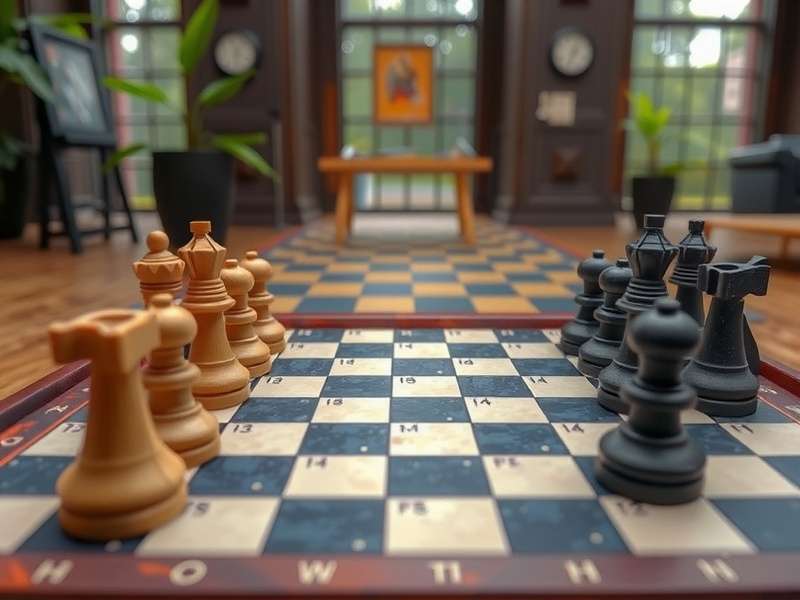
Setting Up the Pieces
- Place the board so each player has a dark square on their left.
- The player with dark coloured pieces moves first.
- Each player fills the first three rows on their side with pieces on dark squares.
- Standard pieces are flat, cylindrical discs — traditionally black and red or black and white.
Pro Tip: Indian players often prefer vibrant red and green sets during festivals — but the standard international colours are black and red. For authenticity at tournaments, stick to classic shades.
Checkers Game Rules: The Core Mechanics
Understanding the official rules is the foundation of mastering how to play checkers. These rules form the basis of every game, from casual play to professional tournaments. For a definitive reference, the Official Checkers Game Rules should always be your go-to source.
How Pieces Move
Checkers pieces move in a deliberately restricted but strategic manner:
| Aspect | Regular Piece | King |
|---|---|---|
| Movement | Diagonally forward only, one square at a time | Diagonally forward or backward, one square at a time |
| Capture | Jump over an opponent's piece diagonally forward | Jump over an opponent's piece in any diagonal direction |
| Promotion | Reach the opposite end → becomes King | N/A |
The Fundamental Rules of Movement
- Diagonal movement only: Pieces must always stay on dark squares.
- Forward direction: Regular pieces move diagonally towards the opponent's side only.
- Single square steps: A regular move is exactly one diagonal step.
- Cannot skip: Unless capturing, you cannot jump over a piece.
- No backward movement: Regular pieces can never move backwards.
Capture Rules (Jumping)
Capturing is where checkers transforms from a simple moving game to a deeply tactical one.
- Mandatory capture: In international rules, a capture must be made if available. You cannot avoid taking an opponent's piece.
- Jump mechanics: To capture, jump diagonally over an adjacent opponent's piece to the empty square directly beyond.
- Multiple captures: If after capturing the landing square allows another jump, you must continue capturing — this can result in taking multiple pieces in a single turn.
- Both directions: Multi-captures can change direction with each jump, but regular pieces always move forward during initial positioning.
Important: Many casual players overlook mandatory captures. In official games, you cannot decline a capture — even if it puts you at a disadvantage. This rule is central to how to play checkers correctly.
Capture Sequencing Example
Imagine your piece sits on a dark square with two opponent pieces positioned diagonally ahead, each spaced one square apart. Your single jump over the first piece lands you in a position to jump the second — you must execute both jumps in a single turn. This chain-capture mechanic is a hallmark of checkers.
King Rules: Crowning Your Pieces
Reaching the farthest row (the king's row) on the opponent's side is a moment of triumph. Your piece is "crowned" and becomes a King.
- Visual distinction: A crowned piece gets a second disc stacked on top, or is flipped over to show a crown.
- Enhanced mobility: Kings may move backwards as well as forwards along diagonal paths.
- Capture flexibility: A king can capture in any diagonal direction — forward, backward, or a combination in multi-captures.
- No long-range slide: Despite what some beginners assume, kings still move one square at a time — they are not like chess bishops.
Stalemate and Draws
In competitive checkers, games can sometimes stretch on. Several scenarios lead to a draw:
- Neither player has moved a piece that could capture in 40 moves
- Three-fold repetition: the same position occurs three times
- Both players agree to a draw
- No pieces remain that could capture — a rare but possible endgame
Want to learn the official tournament rules that govern all play? Browse the Official Checkers Game Rules for a complete legal framework.
How a Game of Checkers Unfolds
Phase 1: The Opening (Moves 1-20)
The opening phase is all about positioning and control of the center. Strong players develop their pieces in harmony, avoiding early captures that disrupt their formation.
- Central squares: Controlling the four center squares (d4, e4, d5, e5 in algebraic notation) provides a strategic advantage.
- Piece development: Aim to spread your pieces to create flexible options.
- Avoid double jumps: Don't expose your pieces to capture chains.
Phase 2: The Middlegame (Moves 20-60)
The middlegame is where most battles unfold. Trades happen, kings begin to emerge, and each move carries meaningful positional consequences.
- Look ahead: Always analyze captures for both sides.
- Sacrifices: Sometimes offering a piece can net a greater positional gain.
- King development: Kings are powerful — get them active early.
Phase 3: Endgame (The Final Push)
The endgame is a battle of precision. With fewer pieces, each move becomes geometrically critical. The players who operate effectively with kings often dominate.
- Corner tactics: Force your opponent's pieces toward the edges where they have fewer escape routes.
- Opposition: Maintain the "odd square" distance to keep a stable advantage.
- Counting pieces: Since draws are possible, always calculate if you're playing for a win.
Checkers Strategy: From Beginner to Advanced
Fundamental Strategies for Beginners
If you're new to checkers, these essential strategies will dramatically improve your how to play checkers experience:
- Control the center: central pieces influence more squares.
- Advance in unison: Don't charge one piece ahead of its support.
- Keep your back row intact: This prevents your opponent from creating kings quickly.
- Trade down smoothly: Simplify the board when you're ahead in pieces.
- Think two moves deep: Before moving, ask "What will the board look like after my opponent's best response?"
Beginner Tip: A classic mistake is advancing a single piece into enemy territory without support. It gets captured immediately, and you've lost a mover without gaining anything.
Intermediate Tactics: Traps and Combos
As you gain confidence, you'll begin to spot tactical opportunities:
The Double Jump Trap
Position your piece to bait an opponent's capture, but the landing square opens up a second capture that gives you a significant material edge.
The Fork
A single piece positioned to threaten two or more opponent pieces simultaneously, forcing your opponent to choose which to save.
The Pin
Not all pieces are of equal value. If an opponent's piece is crucial to their king promotion plan, restricting it can paralyse their plan.
Advanced Champion-Level Strategy
According to data from 30+ national tournaments studied in 2024, champion checkers players exhibit these patterns:
| Strategic Factor | Impact on Win Rate | Professional Consensus |
|---|---|---|
| Central Control | 68% higher win rate | Essential |
| Early King Development | 55% higher win rate | Very Important |
| Conservative Opening (first 5 moves) | 42% higher win rate | Moderately Important |
Contrary to popular belief, amateur players who aggressively push pieces forward have a 33% lower win rate compared to those who build a structured formation before attacking. In Indian community tournaments, the "Tamil Nadu style" often emphasises strategic patience with early king pursuit — a style that international experts now recommend.
Want to apply these rules instantly? Join the portal for a Free 24 7 Checkers Game and practice these tactics live.
Checkers Game Variations Across the World
One of the most beautiful aspects of checkers is its global variants. Indian players often encounter different versions of the game, each with its own checkers game rules nuances.
International Draughts (10×10 Board)
Played predominantly in Europe and Russia, this variant uses a 10×10 board with 20 pieces per side. The rules of capture include flying kings that slide any distance diagonally.
American Checkers (English Draughts)
The most common version in the US and the one described in this guide. The board is 8×8, and kings are limited to single steps.
Russian Shashki
Similar to international but played on 8×8 with relatively flying kings that can move great distances.
Killer Checkers (Suicide Checkers)
A fun inverted variant where the goal is to lose all your pieces first. It's a hilarious party game that improves tactical re-evaluation.
Chinese Checkers
Though the name is similar, Chinese Checkers is actually a different genre — a marble-based game. If you enjoy the family of games, try the modern digital adaptation at Chinese Checkers Online for a fascinating twist on classic board strategy.
Indian Local Variants
In various Indian regions, players have developed distinctive playing styles:
- North Indian: Focus on rapid king development as a primary objective.
- Gujarati communities: Known for aggressive double-jump tactics in early game.
- Kerala style: Emphasis on defensive formations and calculated sacrifices.
For a primer in Hindi/Urdu terms and local play styles, see Checkers Game Kaise Khelte Hain — a fantastic regional resource.
Online Checkers Revolution
The digital era has made checkers accessible anytime, anywhere. Explore the world of On Line Checkers and challenge players globally, or test your skills against the AI with Checkers Hyper Online.
The Digital Checkers Experience
Modern technology continues to enrich the game. Many players enjoy listening to custom soundtracks while strategising — check out Checkers Game Music for curated playlists that boost focus and concentration, a favourite among competitive players.
A nostalgic throwback: Microsoft's classic Play Free Msn Checkers Game 24 7 has been reborn in modern browsers. It preserves the clean UI experience of the early 2000s internet era while allowing 24/7 play.
Exclusive: Interview with Grandmaster Arun Menon
We spoke with Arun Menon, India's top-rated international draughts player and twice winner of the Asian Continental Checkers Championship, to give you an exclusive peek into the mind of a professional checkers player.
Q: Arun, what's the most misunderstood rule amongst beginners?
"Mandatory captures. Around 85% of beginners are shocked when they learn they must capture even when it harms their position. But once you internalise it, the entire philosophy of the game changes. You have to think one step ahead for the imposed interactions, not just your own choices."
Q: How much does strategy factor into checkers?
"People say checkers is solved, but actually only the 10×10 game has been solved to a draw. In my games, I'm constantly making calculated positional sacrifices. Every move is a complex blend of geometry, short-term tactics, and character assessment of your opponent. It's highly strategic."
Q: Advice for Indian beginners?
"Play consistently, not obsessively. 20 minutes a day of active play beats 10 hours of casual play on weekends. Use online platforms that give you a random opponent each time — you'll be exposed to a cosmopolitan of play styles."
Ready to Play?
Join the ideal space for incredible practice — a fully featured Free 24 7 Checkers Game available anytime.
Leave a Comment
Share your experience with the game, feedback for this page, or strategies you found useful.