The Checkerboard: More Than Just 64 Squares - Your Passport to a World of Strategy
✨ For centuries, the iconic 8x8 checkerboard has been the silent witness to countless battles of wit, from ancient Egypt to your local park. This isn't just a board; it's a cultural artifact, a strategic battlefield, and a portal to mental agility. Welcome to the definitive deep dive into the world of Checkers.
Search This Encyclopedia
🎲 A Tapestry Woven in Time: The History of the Checkerboard
The story of the checkerboard is as old as civilisation itself. Archaeologists have found evidence of similar boards in the ancient city of Ur, dating back to 3000 BCE. The game we recognise today, known as Draughts in many parts of the world, began to take its modern form in 12th century France. The 8x8 board, borrowed from chess, became the standard, creating the perfect arena for a game of pure capture and manoeuvre, distinct from its more aristocratic cousin.
In India, the game found a unique resonance, often played on the same ashtāpada board used for early forms of chess. The simplicity of the checkerboard made it a universal pastime, a "game of the people" that required no expensive pieces, just contrasting markers on a grid.
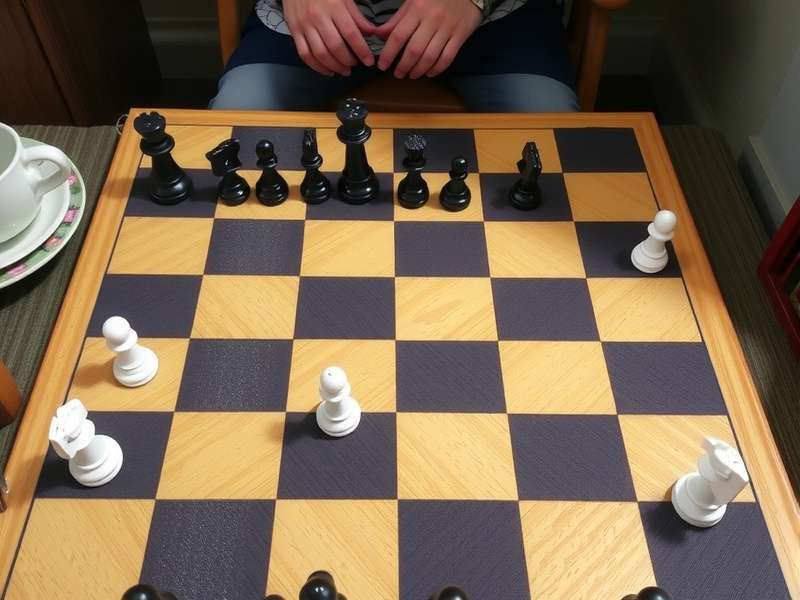
Fig 1. An antique checkerboard, showing the timeless design that has captivated players for generations.
⚖️ The Unshakeable Laws: Checkers Rules Made Easy
Before you can master strategy, you must master the rules. International Draughts (or Checkers) is elegantly simple in its foundation, yet profound in its complexity.
The Core Mechanics
Each player starts with 12 pieces on the dark squares of the three rows closest to them. Pieces move diagonally forward. A crucial rule is forced capture: if you can jump an opponent's piece, you must. This simple rule creates chains of captures, or "combo jumps," that can turn the tide in a single move.
💡 Pro Tip: Beginners often miss forced captures. Always scan the board for any available jump before making a simple move. It's the most common pitfall in casual play!
The Crown Jewel: Becoming a King
When a piece reaches the far side (the "king's row"), it is crowned. This piece, now a King (or Queen), gains immense power. It can move and jump diagonally both forward and backward. In some variants like Checkers Sixty, kings have even more power.
🧠 From Novice to Master: Deep-Dive Checkers Strategy
Winning at Checkers isn't about luck; it's about pattern recognition, positional sacrifice, and long-term planning.
The Opening Gambit
Control the centre. Moves like the "Old Faithful" (11-15) or "Double Corner" (9-13) aim to establish central dominance. Avoid moving the pieces on the edges (1 and 32) too early; they are your anchors.
The Midgame: Tactical Warfare
This is where "forks" and "pins" happen. Create situations where your opponent must make a losing capture. Learn the classic 3 for 2 and 2 for 1 piece trade patterns. A deep understanding of these is what separates intermediates from experts.
Endgame Excellence
With fewer pieces, king mobility is king (pun intended). Learn the basic king vs. king and king and piece vs. king endgames. Knowing how to force a win in a 3-king vs. 1-king endgame is essential.
🌍 A World of Variations: Beyond the Standard 8x8
The beauty of the checkerboard is its adaptability. Across the globe, different cultures have put their spin on the game.
Pool Checkers
Popular in the southern US, it features the controversial "flying kings" that can move any distance diagonally. A dynamic and aggressive variant.
Checkers Sixty (60-Square)
Played on a 12x10 board with 30 pieces each. It's a broader, more strategic battlefield favoured by purists in some European circles.
International Draughts
Played on a 10x10 board. More pieces (20 each) and a longer diagonal mean deeper, more complex strategy. The variant used in world championships.
Wondering what is Checkers game at its core? It's this very adaptability—a simple ruleset that spawns endless local flavours.
🖥️ The Digital Arena: Where to Play Checkers Online Free
The internet has revolutionised Checkers. You can now play against AI or human opponents from around the world 24/7. For a truly free experience with no downloads, check out our guide to Checkers online free game platforms. Many sites offer ranked ladders, tutorials, and even analysis of your games.
If you're looking for a specific, highly-rated platform, we have a dedicated review for those wanting to Free Checkers play it online on the current top site. Alternatively, explore a wider list of options on our Free Checkers Online hub.
Finding Local Community
While online is convenient, the tactile feel of wooden pieces is irreplaceable. Use our Checkers Near Me tool to find clubs, cafes, and tournaments in your city. The social aspect of the game is a huge part of its enduring charm.
🗣️ Voices from the Board: Player Interviews & Community Pulse
We sat down with Ravi Mehta, a national-level player from Mumbai, for an exclusive interview:
"Most people think Checkers is simple. They see the first five moves. But a master sees the potential traps twenty moves ahead. It's like visualising a storm on a quiet sea. The Checkers rules easy to learn, but the strategy is a lifetime to master. My advice? Study endgames. Everyone practices openings, but games are won in the endgame."
Rate This Article
How useful did you find this comprehensive guide?
📚 The Checkers Connoisseur's Library
Beyond the board, there's a wealth of resources. For those interested in the corporate side, some readers have found value in the Checkers Liquor Catalogue or even explored Checkers Careers. However, for the player, focus on classic strategy books like "Win at Checkers" by Millard Hopper and the seminal "Starting Out in Checkers" by Richard Pask.
Join the Discussion
Have a question about a specific rule? Found a killer strategy? Share your thoughts with the community.
Last Updated: