what are the rules of checkers: The Ultimate Guide to Mastering the Game 🏆
Welcome to the definitive guide on what are the rules of checkers! Whether you're a complete beginner or an intermediate player looking to refine your skills, this comprehensive guide covers everything from basic setup to advanced tournament strategies. Checkers (known as Draughts in many countries) is one of the world's oldest and most beloved board games, with a rich history spanning centuries and continents.
In this exclusive guide, we'll not only cover the standard rules but also dive into regional variations, expert strategies, and pro tips gathered from championship players. Let's unlock the secrets of this timeless game together! 🎯
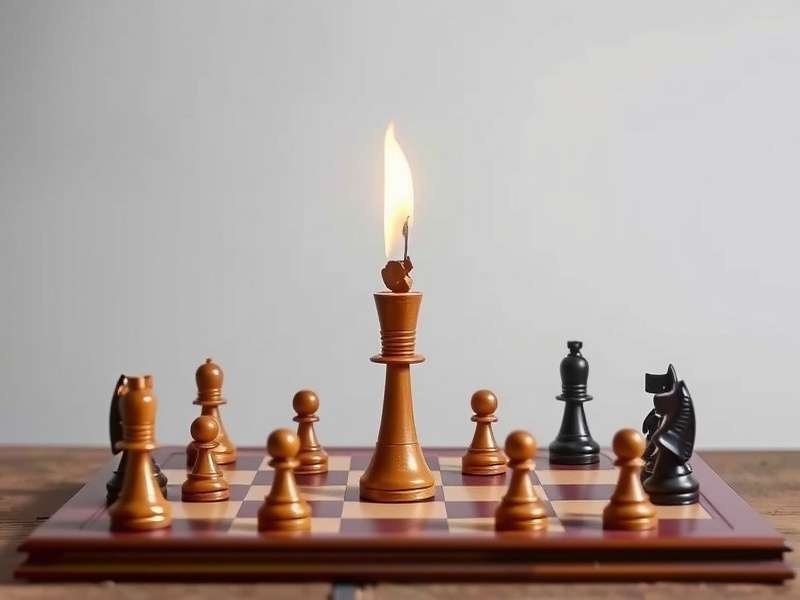
Official tournament checkers board setup with 12 pieces per player on dark squares only.
📖 The Fundamental Rules of Checkers: Getting Started
Before we explore advanced tactics, let's establish the foundational rules that govern checkers gameplay worldwide. These rules form the bedrock of every checkers match, from casual kitchen-table games to international championships.
1. Game Setup & Board Orientation
The standard checkers board consists of 64 squares (8×8) arranged in alternating dark and light colors. Only the dark squares are used for play. Each player begins with 12 pieces, typically distinguished by color (traditionally red/black or white/black).
- 🟤 Pieces are placed on the three rows closest to each player
- ⚫ Dark squares only – pieces never occupy light squares
- 🧭 Board positioning – The bottom-left corner square must be dark
- 👑 Direction of movement – Regular pieces move diagonally forward only
2. Basic Movement Rules
Understanding piece movement is crucial to answering what are the rules of checkers. Regular pieces (men) move diagonally forward to an adjacent dark square. If that square is occupied, the move is illegal. If it's empty, you may move there.
Pro Tip: Always plan your moves to control the center of the board. Center-controlled pieces have more movement options and strategic possibilities.
3. Capturing Opponent Pieces (The Jump Rule)
This is where checkers gets exciting! If an opponent's piece is on a diagonal adjacent square, and the square immediately beyond it in the same direction is empty, you must jump over and capture that piece. The captured piece is removed from the board.
- 🎯 Forced captures – If a jump is available, you must take it (mandatory capture rule)
- 🔁 Multiple jumps – If after one capture, another jump is available with the same piece, you must continue jumping
- ↗️ Direction – Regular pieces can only jump forward; kings can jump in any diagonal direction
4. Kinging (Becoming a King Piece)
When a regular piece reaches the far row (the opponent's starting side, known as the "king row"), it is crowned and becomes a king. A second piece is usually placed on top to signify king status. Kings have enhanced abilities:
- 👑 Movement freedom – Kings can move diagonally forward AND backward
- ⚡ Jumping advantage – Kings can jump in any diagonal direction
- 🎖️ Strategic value – Kings are approximately twice as valuable as regular pieces
In tournament play, kings are marked by stacking an additional piece or using specially marked pieces. The ability to move backward transforms the game dramatically, allowing for defensive formations and surprise attacks.
🚀 Advanced Rules & Tournament Variations
Once you've mastered the basics, understanding tournament rules and international variations becomes essential. Different regions have developed their own checkers traditions, each with unique nuances.
International Draughts vs. American Checkers
While fundamentally similar, key differences exist:
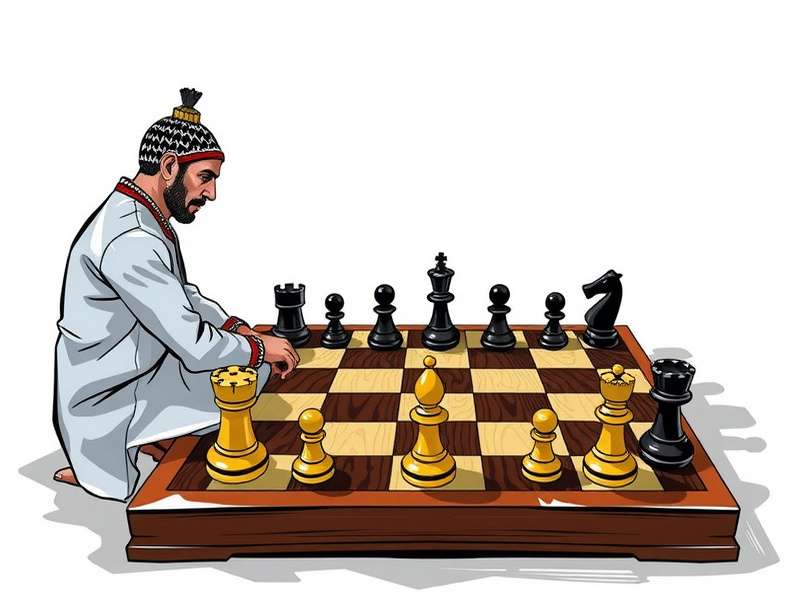
Visual comparison showing board size and piece placement differences between International (10×10) and American (8×8) checkers.
- 🌍 International Draughts – Played on 10×10 board with 20 pieces per player; flying kings (can move any distance diagonally)
- 🇺🇸 American Checkers – Played on 8×8 board with 12 pieces per player; kings move only one square at a time
- 🇬🇧 English Draughts – Similar to American but with slight rule variations regarding capture priorities
- 🇷🇺 Russian Shashki – Kings can move any number of squares; backward captures allowed for regular pieces
Mandatory Capture Rule: The "Huff" Controversy
One of the most debated rules in checkers history is the handling of mandatory captures. In modern tournament play:
- ⚠️ If you fail to make a available capture, your opponent can either force the capture or remove the piece that should have jumped (called "huffing")
- ⏱️ In timed games, failure to capture typically results in the forfeit of the piece
- 🧠 Strategic implication – Sometimes setting up a multiple-jump trap for your opponent is more valuable than taking an immediate single capture
Draw Rules & Endgame Scenarios
Checkers has specific rules for declaring a draw, preventing endless games:
- 🔄 40-move rule – If no capture has been made in 40 consecutive moves by each player, either player may claim a draw
- ♟️ Piece advantage – Certain endgame positions with material advantage must be won within a specified move limit
- 🤝 Threefold repetition – If the same position occurs three times with the same player to move, a draw can be claimed
🎯 Winning Strategies & Pro Techniques
Now that we've covered what are the rules of checkers, let's explore how to use those rules to win consistently. These strategies have been refined over centuries of play.
The Opening: First 5 Moves That Dominate
Professional checkers openings have names and established counterplays. Some of the most effective include:
- 🛡️ The Single Corner – A defensive opening that prioritizes piece safety
- ⚔️ The Double Corner – An aggressive opening aiming for early king advancement
- 🌀 The Old Faithful – A balanced approach that maintains flexibility
- 🎭 The Switcher – Designed to misdirect and create unexpected jump opportunities
Expert Insight: "Control the center squares (especially 21, 22, 23, 24 in notation) in the opening. This gives your pieces mobility and restricts your opponent's options." – Marian Tinsley, 8-time World Checkers Champion
Mid-Game Tactics: Forcing Advantage
The middle game is where championships are won. Key tactics include:
- ✂️ The Fork – Positioning a piece to threaten two captures simultaneously
- 🎣 The Trap – Sacrificing a piece to set up a multiple-jump sequence
- 🏔️ The Bridge – Creating a defensive formation that's difficult to penetrate
- 🚀 The Pin – Immobilizing an opponent's piece by threatening a kinging capture
Endgame Mastery: Converting Advantage to Victory
When only a few pieces remain, precise technique is essential:
- 👑 King vs. King – Learn the basic winning positions (opposition concept)
- ⏳ Timing – Sometimes waiting (tempo moves) forces your opponent into zugzwang
- 📐 Geometric patterns – Certain piece configurations are theoretically won or drawn; memorize them
🏆 Tournament Rules & Competitive Play
Competitive checkers follows strict regulations to ensure fair play. The World Checkers Draughts Federation (WCDF) governs international tournaments with these key rules:

World Checkers Championship match showcasing official tournament equipment and notation recording.
Official Tournament Equipment Specifications
- 📏 Board dimensions – Squares between 45-50mm, board thickness 10-20mm
- 🎨 Colors – Green and buff are standard for international competitions
- ⚫ Pieces – Must be cylindrical, with height 25-30mm, diameter 30-35mm
- ⏱️ Time controls – Typically 60 minutes per player for first 30 moves, then 30 minutes to finish
Notation System: Recording Games
All tournament games are recorded using algebraic notation. Each square has a number (1-50 for international draughts, 1-32 for American checkers). Moves are recorded as "piece square to destination square" with "x" for captures.
❓ Frequently Asked Questions About Checkers Rules
Q: Can a regular piece jump backward?
A: No, regular pieces can only jump forward unless playing specific regional variations like Pool Checkers which allow backward jumps.
Q: What happens if I don't see an available jump?
A: In friendly play, opponents usually point out missed jumps. In tournaments, you may be penalized or forfeit the piece that should have jumped.
Q: How many kings can I have at once?
A: There's no limit! You can have multiple kings simultaneously. In fact, having three kings against one is a theoretical win.
Q: Is there a "touch-move" rule like in chess?
A: In most official tournaments, yes. If you touch a piece, you must move it if legally possible.
Q: Can I download official rules as a PDF?
A: Yes, the WCDF provides free rulebook downloads on their official website.
💎 Key Takeaway: Mastering what are the rules of checkers is just the beginning. True expertise comes from understanding the strategic principles behind those rules, practicing consistently, and learning from every game—whether you win or lose. The beauty of checkers lies in its perfect balance of simplicity and depth.
Share Your Thoughts & Questions
Have a question about checkers rules? Want to share your winning strategy? Join the conversation below!
Post a Comment